
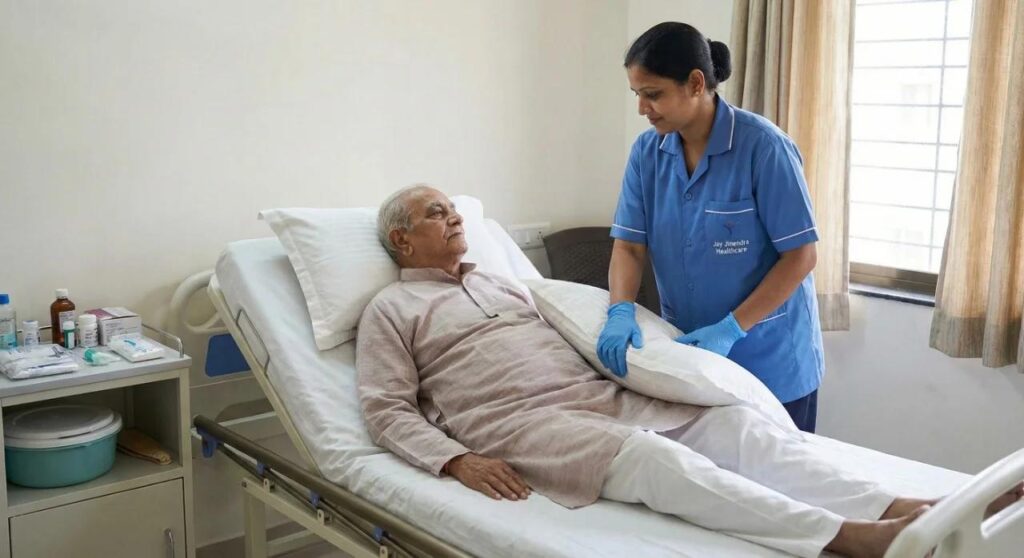
Taking care of a bedridden patient at home requires patience, attention and a well-organised daily care routine. Patients who spend most of their time in bed may need assistance with personal hygiene, meals, mobility, changing clothes and other everyday activities.
For family members, providing continuous care can sometimes become physically and emotionally challenging. Understanding basic home care practices can help families create a more comfortable and organised environment for their loved ones.
If you are caring for a bedridden patient in Dhaka, this guide explains important aspects of daily patient care, hygiene, pressure sore prevention, safe movement and when to seek professional support.
What Is Bedridden Patient Care?
Bedridden patient care refers to the daily assistance provided to a person who cannot get out of bed independently or has very limited mobility.
A bedridden person may need support with:
- Bathing and personal hygiene
- Changing clothes and bed sheets
- Eating and drinking
- Using a bedpan or managing incontinence
- Changing position in bed
- Maintaining a comfortable sleeping environment
- Following a family-provided daily care routine
- Companionship and emotional support
10 Essential Tips for Taking Care of a Bedridden Patient at Home
1. Keep the Patient’s Bed and Surroundings Clean
A clean and comfortable environment is an important part of daily patient care.
Consider these practices:
- Keep the bed sheets clean and dry.
- Change soiled bedding promptly.
- Keep the patient’s room well ventilated.
- Remove unnecessary objects around the bed.
- Keep essential items within safe reach.
- Maintain a comfortable room temperature.
- Keep the floor clean and free from obstacles.
2. Maintain Personal Hygiene
Patients who cannot move independently may need assistance with daily personal hygiene.
Depending on the patient’s needs and abilities, assistance may include:
- Cleaning the face and hands
- Oral hygiene
- Bathing or bed bathing
- Changing clothes
- Hair care
- Cleaning after using a bedpan
- Changing adult diapers when required
3. Pay Attention to Pressure Sore Prevention
Pressure sores, also called pressure ulcers or pressure injuries, can develop when a person remains in the same position for a prolonged period.
They commonly affect areas where bones are close to the skin, such as:
- Heels and ankles
- Hips
- Tailbone and buttocks
- Elbows
- Shoulders
- Back of the head
To help reduce the risk:
- Check the skin regularly for unusual changes.
- Follow an individualised repositioning plan.
- Keep the skin clean and dry.
- Avoid dragging the patient across the bed.
- Use suitable pressure-redistributing mattresses or cushions when recommended.
- Ask a healthcare professional to assess the patient’s pressure injury risk.
4. Help the Patient Change Position Safely
A patient who cannot move independently may need assistance to change position.
Safe repositioning can help reduce prolonged pressure on particular areas of the body.
Before assisting:
- Explain what you are going to do.
- Ask about pain or discomfort.
- Check whether the patient can help with the movement.
- Use suitable moving aids when necessary.
- Follow the recommended care plan.
- Make sure the patient is comfortable after repositioning.
5. Provide Suitable Meals and Hydration
Food and fluid intake are important aspects of everyday care.
Families should:
- Follow the patient’s prescribed dietary plan.
- Offer meals according to the patient’s routine.
- Make sure food is prepared safely.
- Monitor appetite and fluid intake.
- Record significant changes when appropriate.
- Ask a healthcare professional about specific nutritional needs.
6. Maintain Oral Hygiene
Patients who remain in bed for long periods may need assistance with oral care.
Basic oral hygiene may include:
- Brushing teeth regularly when possible.
- Cleaning dentures according to professional advice.
- Keeping the mouth clean and comfortable.
- Observing for unusual dryness, bleeding or sores.
- Reporting persistent oral problems to a healthcare professional.
7. Monitor Daily Comfort and General Condition
Family members and caregivers should pay attention to changes in the patient’s usual condition.
Observe:
- Level of alertness
- Comfort and sleep
- Appetite and fluid intake
- Skin condition
- Pain or discomfort
- Urination and bowel habits
- Breathing changes
- Any new or unusual symptoms
8. Provide Emotional Support and Companionship
Being bedridden can affect a person’s emotional well-being.
Patients may feel lonely, frustrated or dependent on others for everyday activities.
Families can help by:
- Talking with the patient regularly.
- Listening to their concerns.
- Involving them in family conversations.
- Supporting hobbies that can be enjoyed in bed.
- Respecting personal choices.
- Allowing visitors when appropriate and comfortable.
9. Follow Medical Instructions and Medication Schedules
Some bedridden patients require regular medication, medical appointments or ongoing professional supervision.
Families should maintain an organised record of:
- Prescribed medicines
- Medication schedules
- Healthcare appointments
- Medical reports
- Emergency contact details
- Instructions from healthcare professionals
10. Arrange Additional Patient Care Support When Needed
Caring for a bedridden patient may require considerable time and physical effort.
Family members may need additional help with daily activities, particularly when they have work or other responsibilities.
Depending on the patient’s needs and the provider’s available arrangements, non-clinical patient care support may include:
- Assistance with personal hygiene
- Bathing and dressing support
- Meal assistance
- Bedside companionship
- Help with daily routines
- Assistance with safe movement as agreed
- General patient attendant support
How to Prevent Bedsores in Bedridden Patients
Bedsores can develop when pressure and friction damage the skin and underlying tissue. People who cannot move independently may have a higher risk.
Here are some important preventive measures:
Check the Skin Regularly
Pay attention to pressure-prone areas, including the heels, hips, elbows and tailbone.
Look for persistent redness or discolouration, warmth, swelling, pain or broken skin.
Follow an Individualised Repositioning Plan
Ask a qualified healthcare professional to assess the patient’s risk and recommend how frequently their position should be changed.
Record repositioning when required by the care plan.
Keep the Skin Clean and Dry
Clean the skin gently after incontinence or spills. Dry carefully and follow professional advice about suitable skin protection products.
Use Appropriate Support Surfaces
A healthcare professional may recommend a pressure-redistributing mattress, cushion or other equipment depending on the patient’s condition.
Seek Professional Advice Early
A developing pressure sore should not be ignored. Do not massage or rub a red or damaged area to try to improve circulation. Ask a healthcare professional to assess it.
When Should You Contact a Healthcare Professional?
Seek medical advice if you notice:
- New or worsening pain
- Persistent redness or discolouration of the skin
- Blisters, open wounds or suspected pressure sores
- Fever or signs of infection
- Difficulty swallowing
- Reduced food or fluid intake
- Unusual changes in alertness
- New breathing difficulties
- Significant changes in urination or bowel habits
What Does a Patient Caregiver or Attendant Do?
A patient caregiver or attendant may provide non-clinical daily assistance based on the agreed responsibilities.
Typical duties may include:
- Helping with personal hygiene
- Assisting with bathing and dressing
- Supporting meals and daily routines
- Providing companionship
- Helping maintain a clean bedside environment
- Reporting changes in the patient’s usual condition to family members
- Following family-provided care instructions
A caregiver or attendant is not automatically a nurse. Medical assessments, clinical procedures and treatment must be handled by appropriately qualified healthcare professionals.
How to Arrange Bedridden Patient Care at Home in Dhaka
If your family needs support for a bedridden patient in Dhaka, start by identifying the patient’s daily care requirements.
Follow these steps:
- Understand the patient’s mobility and personal care needs.
- List the daily activities that require assistance.
- Identify whether non-clinical attendant support or professional nursing care is required.
- Discuss the patient’s needs with a home care service provider.
- Ask about caregiver experience, responsibilities and availability.
- Confirm the schedule, payment terms and communication arrangements.
Make sure the proposed care arrangement is suitable for the patient’s condition and does not replace necessary medical treatment.
Looking for Bedridden Patient Care Support in Dhaka?
Dhaka Home Care Service helps families discuss home care and patient support arrangements in Dhaka.
If your family needs assistance with daily patient care, bedside support or patient attendant arrangements, contact Dhaka Home Care Service to discuss your requirements and enquire about available options.
Call: 01793337721
Website: https://dhakahomecarebd.com/
Contact the team to discuss your patient’s care needs and suitable arrangements.
Frequently Asked Questions
How do you take care of a bedridden patient at home?
Maintain personal hygiene, keep the bed and surroundings clean, follow an individualised repositioning plan, support meals and hydration, monitor comfort and follow healthcare instructions.
How often should a bedridden patient be repositioned?
The required frequency depends on the patient’s pressure injury risk, mobility, skin condition and comfort. A healthcare professional should recommend an individualised schedule.
How can I prevent bedsores in a bedridden patient?
Regular skin checks, an appropriate repositioning plan, clean and dry skin, suitable support surfaces and early professional assessment can help reduce the risk.
What are the common signs of pressure sores?
Possible signs include persistent redness or discolouration, unusual warmth, swelling, pain, blisters or broken skin in pressure-prone areas.
How do you maintain hygiene for a bedridden patient?
Provide appropriate bathing or bed bathing, oral hygiene, clean clothing, prompt cleaning after incontinence and regular changes of soiled bedding. Maintain privacy and follow any specific clinical instructions.
Can a bedridden patient eat while lying down?
Feeding position should be based on the patient’s swallowing ability and healthcare advice. Some patients are at risk of choking or aspiration. Ask a healthcare professional to demonstrate a safe feeding position and method.
What does a bedridden patient attendant do?
A patient attendant may assist with agreed non-clinical daily activities such as personal hygiene, dressing, meals, companionship and bedside support.
Is a caregiver qualified to provide nursing care?
Not necessarily. Caregiver and attendant roles are generally non-clinical. Nursing procedures and medical treatment should be provided by appropriately qualified healthcare professionals.
When should I arrange professional home care support?
Consider additional support when family members cannot safely manage daily care needs, when the patient requires regular assistance or when the care routine becomes difficult to maintain.
Can I arrange bedridden patient care support in Dhaka?
You can contact a home care service provider in Dhaka to discuss the patient’s requirements, available caregiver options and suitable care arrangements.
Call 01793337721 to enquire about patient care support.
